
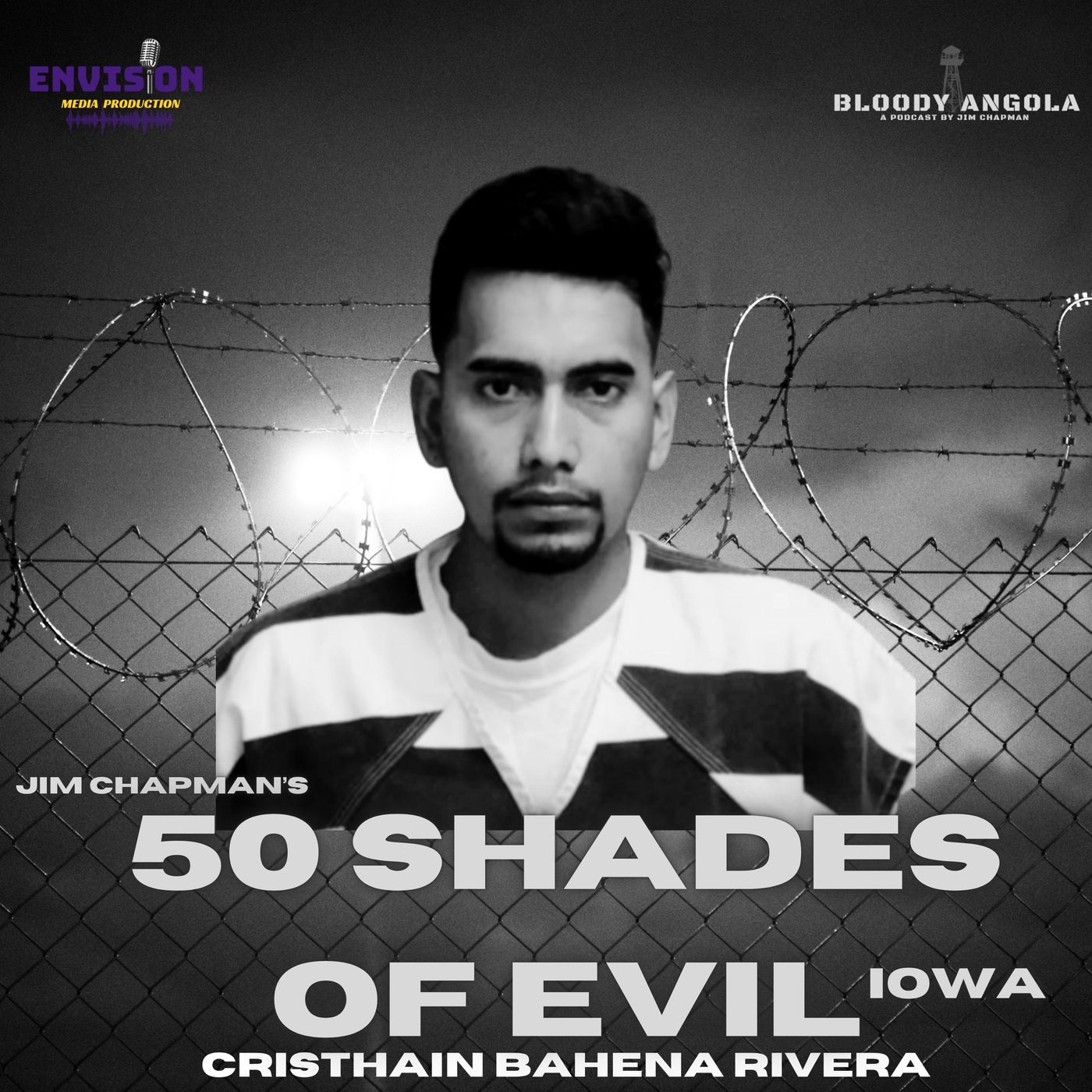
50 Shades of Evil: Iowa - Cristhian Bahena Rivera


 Apple Podcasts

 Castro

 RSS Feed
Join Bloody Angola on Patreon for Commercial Free Early Releases and more here: www.patreon.com/bloodyangolapodcast
Cozy Earth: Get 30% off on Bamboo sheet sets, pajama sets, pillows, comforters and so much more! Use the code EXPOSED at checkout.
www.CozyEarth.com
For Louisiana Local Advertising inquiries or to book appearances please email BloodyAngola@gmail.com
0:15 Welcome back to Bloody Angola. I'm your host Jim Chapman, and today I'm coming back at you with another Fifty Shades of Evil series episode. We're going to step into the quiet fields of rural Iowa for a story that shattered a small community and captured national headlines. It's going to be a case that asked very uncomfortable questions about fleeting encounters, hidden darkness, and justice in the heartland of the entire country. It centers around a killer by the name of Christian Rivera, a man whose paths crossed with that of a bright, promising young woman by the name of Molly Tibbotts with devastating consequence. So we're going to go back to July eighteenth of twenty eighteen. This takes place in Brooklyn, Iowa, and twenty year old Molly Tibbets was lacing up her running shoes. She kissed her boyfriend goodbye for what should have been just a routine jog, but Molly never would come home. What would follow was an exhaustive search that drew volunteers from all over the state, national media attention, and eventually a lead that would lead investigators to Christian Rivera, a twenty four year old farm worker originally from a small village in Guerrero, Mexico. Now, on the surface, this guy, he seemed kind of unremarkable.
1:44 He was quiet, he was polite, just another laborer in Iowa's agricultural heartland. But beneath that the side lay a darkness that would forever change countless lives in this area. So in this episode, and I'm going to take you through every layer of that tragedy. I'm going to walk you through the high stakes trial, the courtroom battles, the dramatic verdict, and the sentencing. But before we dive in, just a quick note. This episode contains detailed discussions of violence and sensitive topics, so obviously listener discretion is advised. I'm going to approach this with the utmost respect for Molly Tibbetts, her family, and all of those affected. And if you are someone you know needs support, resources for victims and their loved ones are available through organizations like the National Center for Missing and Exploited Children or a local crisis center in your area. Please take advantage of that.
2:48 Molly Tibbets was more than a headline. She was a daughter, a sister, a girlfriend, a friend. She was full of dreams and potential, and her story deserves to be told fully, not just the horror, but the life she lived in, the legacy that she left behind. Said. Let's go ahead, let's settle in. This is fifty Shades of Evil. Iowa. Christian Rivera was born on July eighteenth of nineteen ninety four. Coincidentally, he shared a birthday with the date of Molly Tibbett's disappearance many years later. He was born in a small village in the Mexican state of Guerrero. Now this was not a bustling city with bright lights and opportunity. It's a modest, rural village of just a few hundred people.
3:56 It was nestled in a rugged region known more for its chin lunging economic conditions then for second chances in Life in Guerrero's countryside during the nineteen nineties and early two thousands was marked by limited resources. Families would often rely on substance farming, small scale agriculture, growing things right. Whatever work they could find, they would do. Education it was available, but it was inconsistent, and many young people would leave school early to help support their households now. While specific details about Rivera's immediate family remain limited, reports paint a picture of a typical working class upbringing in a tight knit but economically strained village. His early years were spent in an environment where survival and family bonds were pretty central to his upbringing, far removed from the American Midwest where his path would eventually lead. So from a young age, he navigated a world that was really shaped by very modest means. The region around this village it had long faced issues that were common to parts of rural Mexico. You had poverty, limited infrastructure, and the pool of migration, if you will, northward in search of a better life. Of course, I am no proponent of the legal immigration, but you know, it is the reality
5:30 of Mexico for many of these resonents, not all. Some of them have horrible intent when they come into the United States, but there are some that want to come into the United States just for a better life. Now there's a legal way of doing that. We all know that, but that's the situation here. By as mid teens, Christian was apparently in this situation, like so many others, he made the journey north and around the age of seventeen, he cross legally into the United States, and that's no easy feat. Border crossings for many involved dangerous routes, smugglers an immense personal risk. Raevera allegedly arrived with the hopes of working and stability, eventually making his way into Iowa, which was a state known for its vast farmlands and its demand for agricultural labor. Now, once in Iowa he would settle in. He found employment on farms, tending crops, working with livestock, and maintaining operations in often very remote areas.
6:39 And one notable employer was a farm near Brooklyn, Iowa, and he worked there starting around twenty fourteen. Now, he also lived in housing that was provided on the property, which that's common arrangements for farm hands. They actually live on the property. If you're someone that has ever watched Yellowstone, all those guys lived in like bunk houses on Yellowstone. And although that was a TV show, it was reality. That's typical whether you're working a ranch or whether you're working agricultural land like in this situation. So to facilitate employment, he would use the alias John Budd for paychecks and identification purposes. Obviously illegal and a fake name. That detail would later raise questions during the investigation. Now life as a young farm worker in rural Iowa, it was pretty routine.
7:41 Revere was described by those who knew him during this time as quiet, respectful, and hard working. He would blend into the community without drawing much attention, as a matter of fact, little attention at all, and colleagues and neighbors recalled him as polite and unassugment, the kind of person you might would pass on a country road without a second thought, just totally blended in. He reportedly became a father during this time, and accounts from those close to him would suggest he took the responsibility seriously, at least on the surface. Yet even in these early American years, there were glimpses of kind of a complex demeanor underneath.
8:27 Living and working under an assumed identity because you're undocumented, that I would imagine would carry its own stress. You're constantly looking over your back, you don't have a whole lot of opportunity for advancement, and you also have a fear of potential discovery. I would imagine when you're doing something like that, and I was farm country would offer steady work, but also isolation, long hours, and an environment far different from the one he left in Mexico. Now. Well, it's important here to separate fact from speculation. Raver's early life wasn't marked by widely reported red flags or dramatic incidents that screamed danger, this guy's a bad guy. Instead, it seemed as if this time in his life he was just a hard worker, and he seemed determined. But, as you're gonna discover as we go along, ordinary can sometimes mask the evil underneath. After spending hours diving into these crazy cases, the last thing I want is to lie there staring at the ceiling because the sheets feel rough or I'm sweating all night. That's just a few of the reasons I love Cozy Earth. They make the softest, most luxurious bamboo betting and lounge where I have ever owned.
9:54 Their sheets or temperature regulating ultra breathable and actually get softer with every wash. The pajama sets and robes make me feel like I am in total vacation mode while steal at home. I love Cozy Earth so much, in fact, that I worked out a deal with them right now as a special offer for my listeners. You can unlock an exclusive thirty percent discount on anything you buy using the code exposed at checkout when you visit cozyearth dot com. And here's the peace of mind they're betting. Is backed by a one hundred night sleep trial and a ten year warranty, so you can try it completely risk free.
10:35 Stop settling for restless nights. Head to cozyearth dot com. Use my code exposed at check out, and treat yourself to the best sleep you've had in years. Your bed will thank you. That's cozyearth dot com and use the code exposed at checkout for thirty percent off. Now. Researchers and investigators would later piece together that Rivera had been in the US for several years. By the time of the events that I'm going to tell you about that took place in twenty eighteen, he had established a pattern of life centered around farm labor. He maintained a low profile. His family connections seem to have remained back in Mexico, though distance and circumstances would strain those relationships over time. But by all outward appearances into early adulthood, Christian Rivere was simply a hard working individual. Contributing to Iowa's economy. He would live on that property, he would make money, he would farm the land, and little did anyone around him know that this unassuming young man would carry some sort of capacity for an act that would absolutely rip through the fabric of the entire Iowa community and really beyond. So Ravera moves into his early twenty twenties and his routine would solidify. He worked at the farm for several years. He became a familiar face to
12:07 the operations owners and the staff, the Lang family, which was a prominent Iowa family that was heavily involved in agriculture and politics, then the farm and Rivera, as i said, live free on that land, and that was kind of part of his compensation package. And there had been no major criminal history or brushes with the law during this time. He just appeared to keep his head down and do his job. But to me, this ordinariness, if you will, is what makes this case so disturbing. The idea that someone capable of the profound evil that you're going to learn about in just a minute can occupy the same space as the rest of us without raising any alarms is pretty disturbing. Of course, Hindsight twenty twenty Right. Investigators would later scrutinized every single detail of his life in Iowa.
13:03 They looked for any missed signs or patterns, but in real time, during those young adult years, nothing dramatic surface. He was part of the invisible backbone of agriculture in Iowa, just unseen but essential. So by twenty eighteen, Rivera was in his mid twenties. Now he had spent nearly a decade in the US, much of it in Pawshik County. And I hope I'm pronouncing that right. He had a child, a job, a place to live, and a routine that appeared pretty stable. And we're gonna shift a bit. And I've talked enough about him, so I'm going to tell you about Molly Tibbetts. Now, Molly Tibbets was twenty years old in July twenty eighteen, very vibrant, ambitious, University of Iowa student, and she had a very bright future ahead of her. And she was born and raised in Brooklyn, Iowa.
14:02 And she would embody the best of small town values kind of mixed with big dreams. And Molly she was studying psychology, and she was passionate about that subject. Man. She loved to help others, and she was deeply involved in her community. She was also in shape. She was an avid runner, She was a loving daughter, a sister, and she was in a committed relationship with her boyfriend Scott. You're talking about a girl that had everything going for her at this point in time. Friends would describe her as kind, funny, outgoing, and full of energy. She was the type of person who just lit up every room that she walked into. And her family roots they ran deep into Iowa. Her mother, Robin, was a dedicated teacher in the area, and the Tippetts family was very well known and very well respected. Molly had grown up surrounded by cornfields and she had close knit neighbors, but she really kind of wanted to break out of this small community.
15:12 She knew that there was more out there for her, and that summer she was back home in Brooklyn. She was working a summer job, just enjoying time with loved ones before having to head back to classes in the fall. So we're going to go to the evening of July eighteenth, of twenty eighteen, and Molly was doing what she loved to do. She went for a run. She wanted to take a job. It was a warm summer night, somewhat peaceful, puts on her running gear and her bright shoes, and she heads out the door at around seven forty five pm. Now witnesses would later recall seeing her jogging along the east side of Brooklyn, Iowa. Earbuds in, moving with a fast paid of someone who was clearly in shape and ran a lot. And it should have been an ordinary evening workout for Molly, but sadly she would never return. Now, when Molly didn't show up for work the next day and her calls would go unanswered, her family knew that something was wrong because that was totally out of character for her. The search would start almost immediately. Volunteers would pour in from Brooklyn and surrounding communities. Law enforcement from surrounding counties would kick in and volunteer to help out and coordinate efforts. Posters would go up, Social media would light up with hashtag find Molly, and national news outlets
16:45 they would start paying attention. You got drones, working dogs, hundreds of people scouring fields, roads, wooded areas. Tips would flood in, but days would turn into weeks with absolutely no sign of Molly. This wasn't just a missing person gaze. To the people of Iowa. It was personal. Remember, Molly was one of their own. She was a local girl with a big, promising future. The community would rally in a way that really would showcase the best of small town America. Farmers would leave their fields, neighbors organizing searches, strangers driving hours to look for her. Her family would speak publicly with grace and strength and plead for information while clinging to the hope that maybe she was still alive. Meanwhile, investigators would work methodically. They would get phone data, surveillance footage, witness statements, and they would slowly start to paint a picture.
17:48 And a key breakthrough would come from some security video obtained from a residence home on the east side of Brooklyn, Iowa, and it would show a dark color Chevy Malibu following Molly as she ran, and that vehicle would become central to this case. So, after weeks of searching, on August twenty first of twenty eighteen, authorities wo zero in on none other than Christian Rivera. He would get confronted by investigators and eventually he would lead them to a remote cornfield about twelve miles southeast of Brooklyn, and there, hidden under cornstalks and leaves, lay Molly's body. Now only her bright running shoes were visible at first. And that's a heartbreaking detail, y'all. That has stayed with many people who have followed that case. The autopes he performed by the Iowa State Medical Examiner, it would determine the cause of death as multiple sharp force injuries. Obviously, her death is rule of homicide. Molly had been stabbed repeatedly, and the details are tough to hear. Rivera told police he saw Tibbets jogging while he was driving that black Chevy Malibu and quote thought she was hot. He said he drove past her three times, eventually parking his car behind her.
19:17 He then got out of the vehicle and begins jogging alongside her. He said Tibbets was wearing headphones and listening to music and did not initially hear him approaching her from behind. He said at this point he tried to talk to her to get her attention, but she rejected those advances and told him to leave her alone. He said he continued to follow her and get close and Tibbets became aggressive, obviously in self defense, and turns towards him and yells at him to back off, and at one point tries to kind of slap him away, he said. Tibbets then pulls out her cell phone and told him she was going to call the police if he he did not leave her alone, and he told investigators that that threat to call police made him quote very angry.
20:08 He said this anger caused him to lose control, and he admitted to striking or attacking her, noting to the officer that she had blood on her as a result of the immediate physical confrontation. And then he makes an interesting claim. He claims to have blacked out at that point. He said he doesn't remember anything else. He said he later disposes of her body in the cornfield, and he guided police to that location himself. His vehicle matched the one on surveillance footage, and evidence including DNA and other forensics would further lank him to the scene. And so with all this evidence, with this confession, he is obviously arrested and he faced a first degree murder charge, which is the most serious denile and Rivera was held without bond in the period between the arrest and the trial would stretch over nearly three years. It gets delayed by legal motions first and then the COVID nineteen pandemic would hit and all the frustrating delays with murder trials these days and Rivera's legal team during this time, they would raise issues around his interrogation, his immigration status, the admissibility of certain evidence, and at one point there were even debates on whether statements he made were voluntary and if proper procedures were followed. But courts in the end would
21:39 largely side with the prosecution on all the key stuff and that would allow the bulk of the evidence to stand. It's so frustrating to me. I'm a sidebar for a second, just kind of bitch about this, but it's so frustrating to me. This kind led police to her body. Clearly he killed her, right, he admits to kill. He tells police everything he did. But the key the area is he can't use the coercion confession type defense because you knew where she was, knew you led police to her. But eventually, in May of twenty twenty one, the trial would start. This was in Scott County, Iowa, and it was a seven day trial. In prosecutors they would lay out a compelling case built on surveillance video and it would show Rivera's vehicle following Molly, and that lined up with his own statements to police, which they would also use.
22:37 They would use forensic data and also the recovery of Molly Tibbetts, and they painted a picture of what an opportunistic attack on a vulnerable young woman out on the run looked like, which is exactly what this was. Now the defense, they would attempt to challenge all kinds of aspects of this Rivera's can fashion. They would suggest he was coerced and that his account of blacking out somehow would indicate diminished responsibility, which to me is absolutely crazy, basically saying, well, he blacked out, so he's not really responsible for what occurred after that. They argued the evidence didn't conclusively prove intent, which is required for first degree murder charges. However, the physical evidence, including the condition of Molly's body and ties to Rivera's vehicle and his statements, it would tell the real story. So on May eighth, twenty twenty one, after deliberating, the jury would return a unanimous verdict of guilty. Of first degree murder. The courtroom, of course, as you would expect, filled with emotion, as Molly's family and supporters reacted with a mix of relief and really continued sadness for the Tibbetts family. It was a hard one step toward justice after years of paying.
24:04 You don't get closure, right, but you can get some sort of justice. Sentencing would follow on August thirtieth of twenty twenty one in Iowa, and it's important to keep in mind first degree murderer carries a mandatory sentence of life in prison there without the possibility of parole, and a judge by the name of Joel Yates was presiding over this sentencing hearing. And at these sentencing hearings, as you know, you have victim impact statements, and Molly's mother, Robin, as well as other family members, they would speak very powerfully about the profound effect that this murder had in their lives. They talked about the missed milestones, the daily grief, and the strength they would have to find in each other and their community to get through this, and their words would humanize the loss of this amazing young lady.
25:02 And it was at that point that Judge Yates would address Rivera directly, and he was formally sentenced to life in prison without parole, as well as ordered to pay one hundred and fifty thousand dollars in restitution to Molly's estate, which I doubt he had that money, but there it is. Of course, post conviction appeals, as you would expect for life in prison trials, they would follow, You're going to exhaust all that. His defense team criticized everything from evidence handling and jury instructions. But in October of twenty twenty three, the Iowa Court of Appeals, they would uphold that conviction.
25:44 They would affirm the proceedings were fair and the evidence was sufficient. Further appeals getting denied, and it would solidify that verdict. So he's out of appeals as far as I know at this time. Now. Throughout the legal process, the Tibbets family would demonstrate some remarkable dignity. They would advocate not only for justice in Molly's case, but for broader awareness around missing persons and also runner safety, in particular because she loved to jog. Scholarships would get established in Molly's name, and her memory continues to this day to inspire acts of kindness and community support. The trial also sparked wider conversations nationally, especially as it relates to runner safety. So Christian Rivera's life as a freeman it ended on August thirty first of twenty twenty one. He starts serving his sentence of life without the possibility of parole, and he's currently incarcerated at what's done as animos of State Penitentiary, which is a maximum security facility in eastern Iowa. In this particular prison, it has thick walls, structure, routines, and it's where many of the state's most serious offenders served their time. The penitentiary was established in eighteen seventy two, and at that time it was known as Iowa State Penitentiary at Animosa, and it was originally intended as a reformatory for young offenders.
27:17 So construction on this prison began in eighteen seventy and it officially opened in eighteen seventy three. Now, like many prisons of that era, it was designed with a focus on rehabilitation through labor, education and discipline, and the facility was built using limestone quarried locally, giving it kind of a distinctive fortress like appearance. That still characterizes part of that institution today. And in its early years, Animosa housed a mix of inmates, including those convicted of lesser crimes and youth offenders. It operated under the reformatory model, but over time its role evaulved. By the mid twentieth century, it became a maximum security prison, handling only the most serious offenders, and that facility would expand with additional housing units, admin buildings, and security infrastructure. Now, like many US prisons, it faces the challenges you see pretty much everywhere overcrowding riots.
28:26 Now in my research, I even discovered that Anamosa once housed John Wayne Gacy, the infamous serial killer, for a short time on a sidomy charge before his later crimes in Illinois. And Animosa obviously a rough and dangerous prison. In March of twenty twenty one, it would gain national attention when two inmates, Michael Dutcher and Thomas Woodard, would use tools from prison workshop to murder a correctional officer and a nurse during a failed gape attempt. So not a fun place to be whether you're a prisoner or an officer in that facility. Now, as for rivera life without parole in Iowa. In that prison, as you would think, means exactly that no realistic path to release. He'll spend the rest of his days within the correction system. He's going to be subject to the strict rules and daily regimens of prison life typical days for inmates. At this level, you're looking at early wake ups, counted movements, assign work details, limited wreck meals, and then controlled environment and extensive security protocols.
29:42 Contact with the outside world would be restricted to approve visits, mail, maybe an occasional phone call, and all of this monitored. Of course. Now it's important to mention that no amount of legal finality, if you will, can undo what happened on July eighteenth of twenty eighteen. Molly Tibbett's only twenty years old. She had dreams, relationships, a future filled with potential. Her family and friends still carry the weight of her absence every single day. In the years since her death, they turned grief into action. They established memorial scholarships, awareness efforts, and they've become resilient. And that resilience is perhaps the only shade of light in this entire story. In this case also serves as a reminder that evil doesn't always announce itself with warning signs. It can hide behind polite smiles, routine days, hard work, and rural communities often viewed as kind of safe havens. They're not immune. This tragedy, at its core, was about one individual's evil choices and the devastating impact those choices had on an innocent life. To Molly's family and friends, your strength has inspired me as I researched this one. To the investigators, prosecutors, jurors who sought the truth, thank you for doing that. And look, I got a surprise for you. I save this for the end because it's a little bit lengthy, so if
31:16 you want to listen to it, I saved it so you can listen to it. If you don't shut the podcast off, now, that's fine. But it's a little surprised for everybody. And it is the full testimony of Christian Rivera who actually testified in his own defense on the stand in this trial of the murder of Moley Tibbets. And it's a little bit different because he didn't speak English, so he has the headphones on and as the prosecutor asked questions and he responds back. There is an interpreter there that responds and says in English what he is saying in Spanish. So I save this for the end.
31:58 You're welcome to listen to it now. Well, if not, I'll see you next week much love, mm hmm. Defense may call sex witness. Defense calls Christian Behina Rivera.
32:57 Can you stay away? A ready? Sir? Can I get you? Raise your right hand? Please? Do you swear or affirm the testimony you're about to give will be the truth, the whole truth, and nothing but the truth will help you? Gud I do? And mister, would you please head to that chair? Please you may proceed.
33:40 Please state your full name, Christian, Now, sir, you have two last names, Is that right? Yes? The first last name is Bahina, Is that right? Yeah? The second last name is Rivera. Yes. Now that's something we don't see a lot with with white people. Is that something that Hispanic person often has the Mexico. It is the way that is used in Mexico.
34:23 Explain for the jury what your two last names come. From the first one from my father on the second one from my mother. If I were to call you mister, what would be the customary uh last name that I would I would use Ena. All right, mister Behena. Where were you. Born in Guerrero, Mexico. Where is Guerrero Mexico, don't think Amico and apart.
35:07 In the south part of the country. Who is in your family. In sois nipapami, Mama minos. My mom, my father, and two younger sisters. So you're the oldest of the family. Is that right? Is correct? Correct? Correct? Approximately? How many years apart are you and your middle sister? Four years? What about your younger sister, she's thirteen thirteen years now?
35:48 Yes? Do your mother and father work for a living? Mamma Sama? My mother is a housewife and my father works. Where does your father work? What is the camp? He works as a labor on the fields? Is that some job that he has had for some time. The entire life? So as long as you remember, he's worked out in the fields, is that right? Directum? Yes? What sort of jobs are available in your hometown?
36:31 Limpierre pastisal manac society? Oh, well to cleaning the fields, any type of job that is requires hand labor. You're not paid in American dollars down in Mexico, is that right? No? You're paid in pesos? Is that right? Yes? With pesos. How much did your father make working. Milk? Fifteen hundred pesos each week.
37:11 And fifteen hundred pesos. I understand that the dollar fluctuates, but approximately how many pesos are there in a dollar? Around twenty, so that's about seventy five dollars per pay period? Is that right? Corect correct? Correct? Did you attend any schooling when you were in Mexico? Yes? Where did you attend school in my hometown?
37:53 Describe what the school looked liked? No? Now equipara, so. We're very little naso high tech, just only what was necessary? How many rooms were in your school? There is three? Describe your home discribug. Start. Well, it is built out of a dirt and cement and the roof is style.
38:38 Do you have any sort of a kitchen? Only what is needed for cooking? And what is that, sir? Is too fine? Well? Refrigerator, stove? What about living spaces? Uh? Is there any sort of living room or television set? On television? Non s lamentes rectangulo los bartos. No, it is only used at rectangle and then the rooms are divided by curtains.
39:21 Now, sir, you went through Uh? You graduated from your school is that rightrect Yes? How far do you go to graduate from school in Mexico? Well, you go around nine ten years? I interpret will correct you got around nine to ten. When you graduate. Is that something that is celebrated in Mexico because in Mexico. Yes. Do you have a lot of pictures of when you were in Mexico?
40:08 Not a lot. The last picture that you have with your family is that from when you graduated? Okay, sir, bring up on your screen that is defendants exhibit F F F. Can you see anything? Yes, describe what is in that picture?
40:55 I am with two of my cousins at the ending of my schooling. Now I ask counsel to bring up defendants exhibit G G G or excuse me, excuse me, L L L. What is shown in that picture? Me? Well, me, my parents and my sister, your honor. At this time I would offer defendants exhibit F F F. In L L L. Mister Brown, and it's our only objection is irrelevance.
41:37 Injections overruled At this time, defendants Exhibits F F F and L L L are admitted. I'd moved to publish your honor. Granted. Now, sir, defendants exhibit F F F What is this show? You pimos me. And my cousins. You're dressed nicely, is that right? Actor? You can say that which one are you? They want in the middle?
42:20 And what is this portray? Sir? Yester photography COLA Just. A picture with my cousins when I finished my school year. Now I'm going to ask counsel to pull up a defendants exhibit L L L. What is this SHOWMANA? Well, the same day, but with my parents and my sister. Now, Sir, at some point in time, you decided to come to the United States? Is that right? Yes? Yes?
43:03 When was it that you decided to come to the United States? When I had just turned seventeen years old? Now you were aware that your father had brothers that lived in the United States? Is that right? Yes? And was it your understanding that they all lived close in proximity to each other? Yes? At some point in time did you make the decision to come to the United States? Yes? How does one get here crossing the border?
43:49 Do you have to hire someone to help you? Yes? What is that called. A coyote? Let's talk about how you got to the United States. You first went to meet with the coyote. Is that right? Yes? And where was that. At the border with Texas. When you got there? Were you able to find this person persona yes? And then where did you go.
44:38 Then to cross the river? How did you cross the river. Lunching on an inflatable raft? How many people were with you? Nine or ten? Once you crossed the river? What did you do next? Where? If I okay? Los? Well, there were many steps, but what I remember is we walk around the points of the checkpoints at the. Border, So you walk around where border control is. Is that right.
45:26 Correctly? Yes? And the next thing that you did is what. Arrived to Houston. When you arrived to Houston, did you go anywhere. At a hotel? At the hotel did you stay with anyone else? With the people that I crossed with? So all nine or ten people were in this hotel room? Yes? Where did you sleep. On the floor? Next? What did you do? Sirstai?
46:10 We arrived at the state of Iowa. Did you get there by vehicle? Yes? Once you got there were did you meet your uncles? Yes? Where was that at in Iowa? Had you ever met any of these people that are are your dad's brothers? Well?
46:52 I remember, well, I remember since I was very young, but since they came over here, I did so, So what. You mean is that you think they've came to Mexico some of them before? Is that right? Yes? But you don't remember who and when? No, I don't. Once you meet with your your dad's brothers, are you offered a place to stay? Yes? Where did you stay at. With Louis Medina?
47:33 Who is Louis Medina? He is the husband of one of my aunts. Once you settle into Iowa, how long did it take for you to find work? Two days? How were you able to find work so quickly? One of my uncles find it for me. Where did you start working at? I am in. Blastoone at a dairy at a town called Blurstone.
48:18 What did you do at the dairy? O will milk cows? When you worked there? Did they require any sort of formal documents? Uh, to guarante to verify you're a United States citizen? Now? How were you paid with chicks? And so they were written out to your name? Christian Behina Rivera? Yes? What did you do at the dairy. The milkhows? How long did you work there?
49:00 Oniescy media around? Do you want a half years? Once. Uh. At some point in time, did you decide to change employment? Yes, and specifically you went to Yarib Farms. Is that right? Yes? How did you find the job at Yarb Farms? I found out that they were hiring people. Did you talk with them? See? Yes? Was it a better paying job?
49:41 Yes? What were you paid at yar Ab Farms? Twelve dollars? Twelve dollars with sixty cents. And that's per hour? What? See? Yes? So you worked a lot, is that right, sir? Yes? See yeah. There's been some testimony that you worked twelve hours a day when you worked, Is that correct? Yes? Yes, I will know the math some days more. And there's been testimony that you worked twelve out of fourteen days. Is that right?
50:25 Yes? Yes, So at the very least you would work twelve of the fourteen days twelve hours a day? Is that right? Yes? Yes? On average? How much money would you bring home every two weeks? Oh? Yeah, I s gess. I kind of can say. Between one thousand, five hundred and one thousand, six hundred dollars? Now, sir? Did Yarb Farms require you to have notification or official documents? Honest? Sie? Yes? And did they require that right off hand?
51:10 Yes, but if you don't have them, they'll give you time to get some. So you started right away, is that right? Yes? When you started right away? How were you paid. Cash? So they paid you cash until you were able to provide official documents, is that right? Yes? When you first introduced them yourself to them? What did you say? Your name was Christian Behina Rivero. Now after you submitted documents you had a new name. Is that right? Yes? What was that.
51:52 John Bud? Now when you worked for Yrby Farms, did they regularly refer to you as uestennther basis sometimes? Now, sir? It's customary for the oldest male to take care of his family, is that right? Yes? Normally? Did you provide any assistance to your family in Mexico? See? Yes? How much money would you send your family? Uh? In how often you can't keep frequence here?
52:36 Sit spots around seven or eight hundred dollars per month? How do you get that money to Mexico. Through the Mexican stores? Would it be fair to say that there's a lot of Hispanics in this country that provides had assistance to their families down in Mexico? Most of them. So it's not uncommon for our Hispanic population to go to the Mexican school store and send money home. Is that right?
53:19 Correct? So similar to you having two last names more often than that, that's what our Hispanic population does. Is that right? Yes? Yes? Now, at some point in time you met a woman that testified yesterday? Yes? How old were you when you met Iris Gamboa nineteen? She was still in high school? Is that right? Yes? Yes? Where were you at that you met her? At a fifteen year old birthday party?
54:03 And a birthday party it's called or it's called a king sennira? Is that right? Yes? What does that mean? Yes? In nah Nina and Mexican belief is when a girl goes from being a girl to. A woman, So a king signira is something that is often uh celebrated amongst females approaching adulthood. Is that right? Yes? Yes, When you went to this party, what else describe?
54:48 Was it mostly Hispanics or were there white people at this party? Mexican? And sir, you don't have any I guess it's not that you dislike white people. Would that be fair to say? Correct? Correct? But you also in this country have routinely spent time with other Hispanics? Is that correct? Yes? Yes, Now Brooklyn it it has a fair amount of white population. You'd agree with me on that mostly, And so would you come across white people and your day to day experiences see yes, but routinely when you're you're spending time with uh, when you're socializing, is it with other Hispanics?
55:46 Yes? What us language is used? Spanish? So with Iris, you guys hit it off pretty quickly. See yes. Did you become boyfriend and girlfriend fairly quickly? What? Surely? Yes? Eight days after meeting? How long were you in a relationship with Iris Gamboa? Four years? At some point in time did she become pregnant with the child? Well? I this was the most assume.
56:28 One year after starting our relationship. Did you to eventually move in together? Yes? And was that at the residence at Yariby Farms that has been talked about. Yes, at a certain point it was decided for you and Iris to separate. Is that right? Yes, she moved to a different residence. Is that right? Yes? Did you help her move? And since then have you agreed on a custodial and support relationship with Iris?
57:12 Yes? What she described yesterday. Is that what you guys have been doing now, sir? Other than for this offense, have you ever been in jail or in custody ever had any law enforcement contact other than what's been described with Deputy Kivy and then with law enforcement when you were arrested. No, you're here illegally, is that right? Are you careful to avoid contact with law enforcement?
58:02 Very careful? Do you try not to drive around often? Only when it's necessary? Do you take back roads when you're able to those caminos? Said pinum cut. I see, yes, sir. When you talked to law enforcement when they brought you in from the dairy farm, approximately what time did you go to the Sheriff's office. Between two and three in the afternoon? What time did you go to work that day?
58:47 So it was gonna clarify qu three media four in the morning. Do you remember when law enforcement showed up at Yaribe Farms? Yes? And what do you remember? I start, I was working and my boss came to the area where I was and he told me that that we were needed in the office and there was probably going to be troubles for me. What did you think those troubles were?
59:27 Say? This was. At that time I didn't know. Uh, do you know what a raid is? Pando? When immigration comes. And it's Have you heard of immigration coming and kind of rounding up illegal Hispanics? Yes? Were you afraid that that was what was going to happen here. For a moment? Yes? Now, at some point in time, you agreed to go to the sheriff's office. Is that right? Yes?
1:00:08 And you were interrogated for eleven plus hours? Is that right? Yes? Correct? Did you tell law enforcement the truth that night? Not all Molly Tibbetts was in the trunk of your car? Isn't that right? Yes? And you did not tell them what really happened? Isn't that right? Correct? Let's talk about what happened that night on July eighteenth, twenty and eighteen. You got home from work? Is that right?
1:00:54 Correct? Correct? When you got home, is there anything that you play and to prepare for the next day? Yes? What is that? I had planned to clean out my car because the next day I was planning on going out with a girl. So you had a date lined up? I didn't. See. Yes. Did so you get home, do you shower? No?
1:01:36 No? I went to my uncle's house to ask him for a vacuum cleaner to clean my car? Where does your uncle live? When you did you go? End up going to your uncles and speaking with him? No, he wasn't at home. Did you go ahead and take the vacuum that moved? Correct? That's something that wouldn't bother him from prior dealings. Is that right? No? Actually at the mountain? No, And in fact I called him to tell him that I had taken it.
1:02:19 So you get the vacuum and then where do you go. To my house? When you get to your house? What do you do? Uh? Really take it? Yes, it's. I realized that the sun was still very strong. It was too strong to clean my car, so I decided to go in and take a shower. Approximately what time did you take a shower at your home? They say, you say media, about six six thirty. After you took a shower, What did you do, Sally?
1:03:01 I left the bathroom. What did you see those Partsonas and the silent. Two people in my living room? Those two people in your living room? How were they dressed? Cost with sweaters and their faces covered? Describe the color of the clothing that they were wearing. It was dark clothing. Can you describe what the build of either of these people.
1:03:48 One of them was bigger and a little bit fatter, and one of them was about my stature and a little bit stronger burly. Did those men have any sort of weapons? Say? Yes? What described which man had which weapon? Matt Grande is. The bigger one. I could see that he had a gun, and the smaller one I could see that he had a knife. Described the gun? I don't know a lot about guns. I can just say that it was black.
1:04:32 What about the knife. Mediana color? It was a medium sized knife, camouflage color. What did these men say or do? Some guz. That I shouldn't do anything stupid and everything was going to be okay? What happened next? We were there for a long while, And did anything happen while you were there?
1:05:12 Just so Lamente, I used to. Well, they were just there whispering, and we were there for a long while at. That point in time. Were they ever violent towards you or aggressive towards you? No? Did you comply with all of their instructions? Yes? Did you argue with them? Did anything else happen at the residence? No, not until we left the house.
1:05:56 Once you left the house. What happened? So we got into our the car. And when you get into the car, which man gets in which seat? The bigger one in the back seat and the other one gets in the seat beside me. So the the smaller one is the one with the knife? Is that right? Yes? And then did you drive, Michael see? Yes, when you drove, did they tell you where to go? I don't I don't like that, don't come.
1:06:39 They just told me to drive straight. Did they make any comments while you were driving? Yes, one of them told the other one. One of them said to the other one something about someone running. Now, sir, you don't speak much English? Is that right? Correct? How were you able to tell what they were saying? No? Endo, Well, I don't know how to speak a lot of English, but I understand the basics. And so you were able to understand that's what was said?
1:07:22 Is that right? Connecticut? I guess that's occasionally correct. Once you get to Brooklyn, what happens? So we just went into town. We went into town by what you could say, it would be the back way into town. Is there a specific road that you came in on? Yes? Do you know what that road is? I don't know. The name of the road.
1:08:04 Sir, I'm going to show you State's Exhibit five and that's already in the record, so if we could publish it now. Sir, you've seen this exhibit before, is that right? Yes? And there's a road that is described as three hundred and eighty fifth Avenue on the screen. Is that right? Yes? Is that the road that you followed on your way into Brooklyn? Correct? When you followed that road, did you see anyone?
1:08:46 Say? Yes? Who did you see. A person jogging? And sir, did you know that person at that time? No ever met Molly Tibbets before? But now do you recognize or believe that person was Molly Tippett? That's right? When she was running? Was she running out of town? See? Yes? And you're driving into town? Is that correct? What happens next?
1:09:31 We just continue driving this place? Maybe, And then they asked me to turn around. When you turned around, were you in town? What happened next? We uh went back out through the same way we came in. Tell me what happened next, sir? The we drove straight. We drove straight on the same route. Clarify. And then they asked me to turn turn.
1:10:15 Back When you were in town. Describe these men and anything that they were doing in the vehicles. Just that when we were coming in town, they tried to kneel down, crouch down as much as they could in the seats. You don't remember the exact route that you drove in Brooklyn? Is that right? Correct?
1:10:55 But you've seen the surveillance camera from Logan Collins serving valance footage. Is that right? You can't. Correct? Do you think that likely was your vehicle? I? Oh, yes, Uh, it would looks like your vehicle. Would you agree with that? Yes? And you remember driving around in that area? It was not, but I. Don't remember if it was exactly that area, But that's my car. Now. How many times did you drive by Miss Tibbets.
1:11:45 Around three or four? And that was that direction of these men? Is that right correct? Let's talk about the last time that you drove by Miss tibbots stables? Uh? Love not ye? The last time that we met her, she was on her way back into town. And specifically, sir, she was running on three hundred and eighty fifth Street. Is that right? That's correct?
1:12:26 May I approach, sir. I'm going to hand you this laser pointer. The staple. Sir, if you could point to the area that you met Ms Tibbets the last time. Nothing western. You cannot see it on the map. M alright, we're out of batteries here. If you if it gets up, sir, go ahead and get up and shot to the where Anna did you translate it?
1:13:19 I interpret didn't hear any words, okay. And Christian, I'm not trying to trick you. I know you said that it's not on the map where you met her the last time. Is that right correct? Could you point to the direction of the area outside of the map where you saw her now, s sir, I'm going to bring up another exhibit. Oh, thank you, Now, sir, it is the place where this woman was running, uh shown on this map. Can you point to the area on the exhibit where this woman was was it Arona?
1:14:49 And you can go ahead and sit down, sir. Now you pointed to an area that was just before or the intersection of three hundred and eighty fifth Avenue and two hundredth Street. Is that right? Yes? So when you're driving on that road, are you driving towards town or away from town? When you see Miss Tibbets, is she driving or is she running towards town or away from town, towards the town, so you meet her head on with your vehicle. Is that right correct? Does she make any statements or or anything like that. No, she doesn't wave or anything like that. Now, what happens next?
1:15:54 Norse? Well, we continue forward and where you come to the intersection the cross then they asked me to turn back. So the intersection is three hundred and eighty fifth and two hundredth Street. Is that right? Yes? Did you do that? Yes? Once you did that, did you drive back towards town on three hundred and eighty fifth Avenue? Yes? What happened next?
1:16:36 No? Metos. We drove for a little bit and then some meters forward they asked me to stop. Were you able to see the woman at that time? No? No? Describe the terrain you. Have a. Colmas. Well, it was like a straight road, but there were like some hills to it. This is let me stop there, take a recess at this time. Members of the jury, I want to remind you of your admonition. Will take it ten minute recess.
1:17:20 Please leave your notebooks where they are and you may leave at this time. And mister Bahama, you may step down at this time the presence of the jury. Mister Bohema, the defendant, is present along with all the attorneys of record. Sir, I want to remind you you're still under oath and with that mis freeze you may continue.
1:18:13 So, sir, you're driving back on that road back into town. Is that right? Yes? And at some point before you get back into town, were you directed to stop? Correct? Who told you to stop? The person that was next to me? So the man in the front seat, is that right. Correct? Also the man with the knife? Yes?
1:18:53 What happened next one of the got out of the car, which one. The la parte, the one that was on the front. So the guy with the knife correct? Correct? What did he do. In a as in front? Well, he just started going towards a forward towards the town direction. How long was he gone? It is two.
1:19:34 D around ten to twelve minutes. The guy in the back was he doing anything? No, he was only quiet in the back part. Did he seem nervous. Tempo elsa. Well, with the time it started going by, he started kind of whispering in the back. Did you hear him say anything? But just. And then Africa Nico coman Jack, Well you could hear a lot of things, but I guess what I heard him saying is, come on.
1:20:24 Jack, now, sir, you've heard mister Freese and I at least insinuate that Dalton Jack could have been involved. And this you've heard the trial cracked. Yes, are you telling this jury that Dalton Jack was one of those people? No? Do you know who either of the people were that were in that car with you? No? What happened next? La, Well, around like twelve minutes after that person comes back to the car.
1:21:13 And when they come back to the car, do they get in? He gets in? What happens next? They asked me to continue driving? Did you continue to drive into town? Yes? Did you reach town? No? Were you directed to stop at some point? Yes? Can you describe for the jury approximately how far you traveled? Not more than three hundred meters?
1:21:55 What were you directed to do? Once you drove three hundred meters, let's time in. Jarvis to stop and to hand them my keys. What happened next? Well, first the person that was in front got out of the car, and then the person who was behind. What happened next, Let's go check out. I've heard them opening the trunk. What happened next?
1:22:36 Solamente, s. I've just heard a movement in the car and then that the trunk closed. Did the men get back in the vehicle? Yes? What happened next? They asked me to turn around? Did you do that? Yes? What did they say next? They asked me to continue driving and to go towards the gravel road?
1:23:20 Did you do that? Yes? What happened next? Solo? For those time and handle, I just. Remember to be driving a fast. At some point in time, did you stop? No? No? Did so you continue to drive? Is that right? Yeah? For several miles? Right? And what happened next? We're not on the I'm not. We got to an area, We got to a road that was paved, and they asked me to cross that.
1:24:10 And then you continued down gravel road. Yes. Do you remember which direction you're going? I don't remember the address. Oh, I know that it was straight? So you continue driving? Is that right? Correct? How long did you continue driving? Perhaps five to eight minutes? At some point in time did they direct you to Poland somewhere?
1:24:54 And alf Casablanca? We arrived like in front of a white house. Sir, I'm going to bring up states Exhibit twenty five. You need to do that, sir. You've seen States Exhibit twenty five. Is that right?
1:25:47 Yes? And you generally agree that this was the area that Molly Tibbet's body was found. Is that right? Yes? When you mentioned a white house, it is that what you're talking about in State's Exhibit twenty five, correct, Now, sir, I'd ask you to get up and to point to the jury where it is that you were directed to turn. If you see it, tell me what happened next. Maybe you don't commit it to sata.
1:26:28 They asked me there to go back. So you turned in at the house and then you drove back. Is that right? Yes? Now, sir, I'm now showing you State's exhibit twenty eight, or excuse me, twenty six. This is the same area from a different direction, Is that right? Yes? When you came back, was there a point in time that you were told to turn? Yes? Where were you told to turn? If that's shown on State's Exhibit twenty six.
1:27:09 And that Rakistan and myself at the entrance of the cornfield. If you could get up again and show the jury on State's exhibit twenty six, I'd appreciate it. Now, sir, State's Exhibit twenty seven. This shows the entrance of the cornfield that you just pointed to. Is that right? Yes? Have you ever been to that location before? No? Did you understand really where you were?
1:27:55 Understate? Now? Once you pull in, what happens next? So they only asked me to turn the car off. So and they start getting off the car. So they get out? Is that right? Yes? Did they take your keys? Yes, they took my keys on my phone. What happened next? Say?
1:28:35 Before they leave? One of them tells me not to say anything about what had happened, that they knew Irish, and that they knew my daughter, that if I said something, they will take care of them. After that, what happened. They told me used to wait a few minutes and to leave. What happened next? I got out of the car because I didn't have my keys. Well, obviously I knew there was something in the trunk.
1:29:22 And why did you think there was something or why did you know there was something in the trunk? Yes, because previously I had felt when they had placed something or put something in the trunk. Did you look in the trunk? Yes? What did you see. A body? Was that the body of Molly Tibbets. Yes, at that point time? Did it look like she was alive?
1:30:05 Prince multiple Well, at the beginning, I saw like a little bit of movement, but then after there was no movement. Did she have injuries to her body? I did not look. What did you do next? As okay? Well, I say, there are a couple of minutes thinking what to do, and then I just I decided to take the body out.
1:30:46 Why didn't you call the police, sir? Because I was scared? Why were you scared? Because well, if I would have called the police is something that it would have been seen good? It wouldn't have been right. Did you have any reason to believe that Molly Tibbet's life could be saved? No? When you picked her up from the trunk, describe her body.
1:31:31 So it was very heavy. What about any signs of life that you saw to Molly Tibbets? None? How was she dressed. With sports clothing? What did you do next, Sir? Solo? I just. The way I could. I picked her up and then I put her in the cornfield.
1:32:15 Did you cover her with corn? Yes? Why did you do that? To be exposed expostal? Sol? Because I didn't want to leave her well, I didn't want her to be too exposed to the sun. When you left her. Was she clothed? I left her exactly how she was in the trunk? And at that time do you recall her having any shorts on?
1:33:00 Yes? What about her sports bra? Did it cover her chest? Everything? She had everything on? There was only one shoe that was off. What did you do after you laid her in the corn? I tried. I tried to go home. Were you able to figure out how to get home? No? How were you able to find your way home?
1:33:42 I looked at my phone. And did you specifically use your phone to find directions? Yes? Now, Molly Tibbett's phone, fit bit, it and her earbuds were left in your car? Is that right? Ah? Yeah, they were in the trunk at this along with my phone and my keys. What did you do with Molly Tibbott's phone fitbit and her headphones or her earbuds?
1:34:23 Does it? I left it on the side of the road. Now, sir, you didn't tell a soul about this for over a month? Is that right? Correct? And if you weren't approached, you would have taken this night with you to the grave. Isn't that right? Correct? Probably? Most probably? Why didn't you call the police or let investigators know what happened? Get me soon?
1:35:05 Because I knew if I did it? Because I knew if I did it in any way, I was going to be involved. And specifically, were you afraid for your ex girlfriend and your daughter? Sustained and asked that the question be rephrased. Please, Were there any other reasons that you did not call law enforcement? Yes? What were they? Because I remember that they said that if I will say something, they were going to do something to uh, my family, my ex girlfriend, my daughter.
1:35:54 They used her name. Is that right correct? Do you know Ulysses Felix? Yes? How do you know Ulysses Felix? Me? Me? It is my girlfriend's cossing. So it would be Iris's cousin. Is that right? Yes? Has he been to your home before? Yes? Has he spent the night before? Yes?
1:36:34 Now you're not alleging that Ulysses was in that car? Is that right? Correct? But Ulysses did spend time with your I guess Hispanic group of people. Is that right? Yes? He would attend various functions, is that right? Yes? Did you know his parents? Yes? How did you know them. We worked at the same place. Now, Ulyss has also attended Brooklyn uh school? Is that right? Yes?
1:37:22 And unlike you did, he seem to have a fair amount of white friends. Yes. All right, sir, let's go through this interview. Uh. You were interrogated for over eleven hours? Is that right? Yes? Describe how the interview progressed through those eleven hours. Well, at the beginning, they were asking me common questions like where I was from? Uh, any type of clarified utina, my routine and all that.
1:38:16 Do you recall them telling you that they weren't with immigration. Yes, And when they told you that, did you believe them? What a momento? For a period of time, did they continue to be more confrontational with you the same? Tell me how the interview progressed. Hum, Well, they started accusing me with things.
1:38:57 What sorts of things did they accuse you with? With a couple of pictures they had, they said that they have found woman's hair in my trunk and that they have found her phone or pointed my phone with her phone with. My so they suggested that they had phone activity that tied your phone and Molly's phone together. Sustained, Please rephrase.
1:39:52 So please make the jury understand what you meant about the evidence that they confronted you with your phone. Excuse you something, I don't understand that. They had information that my telephone and Molly's telephone were traveling together. Did they make any other suggestions that they had specialized technology with reference to your phone? No? No, no. Did they ever suggest to you that what you were saying was not true?
1:40:34 Yes? How often did they suggest? Sat? Every? Every so often? Were you Did you ever believe that things would be better if you told them what they wanted to hear? Yes? Was that often? Did they ever use the phrase help yourself? Yes? And what did you take that to mean when they used that phrase? Plea?
1:41:20 Well that if I helped them, if I told them what they wanted to hear, that they would help me. Did they confront you or did they tell you that often? At some point you said that you blacked out? Is that right? Yes? Was that your idea? No? No? They said it first? And specifically, was there a suggestion made that you might be crazy, that. I've plant and it's time.
1:42:04 Something like that, something like that, Sometimes people can be sick and they can forget things. Now, sir, did you intend to tell these men the truth about what really happened that night? I say no, no, why not? Because in my mind I had my. Daughter, So no matter what happened, you did not plan to tell them what really happened. Right as this interrogation went on. Tell me about your alertness. Okay, this EXU say time that.
1:42:48 Because well I was already tired and I was very sleepy. You saw some videotape of you falling asleep during this inner interrogation? Is that right? See? Yes? Were those the only times that you fell asleep during the interrogation, not to. Say much of the basis, I'm not sure, but there were many times. At some point in time the investigators asked you to try to take them to Molly Tibbets. Is that right?
1:43:28 Yes? And you agree? Is that right? Yes? Yes? Why did you agree to do that at that point in time? Well, principally, Well, for one, because I was already very tired and I wanted to stop. Yeah, ka, And most importantly because they told me to put myself in the family's position and to think of her that if she was my daughter, what would I have done?
1:44:21 Okay, So you drive out, you don't drive, but you ride out to the body. Is that right? Were you able to provide assistance in finding Molly Tibbits? Did they seem to have some idea already where she was? I can't be sure about that. Describe the car ride out there, but it's Jo Petticue. Well. I asked them to go to the highway that's on the way to my trailer.
1:45:03 Uh, and then the. Academy to have a point of well, to get oriented. Did they do that? Yes? And tell me about the trip then to the body? So did you hit him? So? I told him to drive straight and not to stop. What happened next? We didn't stop until we got to that white house you can see in the photo. When you got to the white house. What did you do?
1:45:49 Well, that's when I realized that that was more or less the place, but that we had gone past it a little bit. So did you direct them to turn around? Correct? Were you able to assist them in finding the body? Yes? Sir? How tall are you. Five seven? How much do you weigh today or now? The last time that I was weighed in the jail was one hundred and forty eight pounds.
1:46:29 How much did you weigh when you were arrested for the death of Molly. Tippets one twenty five pounds. No further questions, mister. Brown, you may cross examine. Mister Vhenna. You led officers to Molly Tibbitts's body. Is that correct?
1:47:10 Yes? You remember your interview with Officer Pamela Romero. Yes, you recall it even here today. Is that true? Most of the things you're not too You were not too tired to remember what you and she talked about at the Sheriff's office. Is that right? Uh? What could you repeat the question? You were not too tired to remember what she you and Pamela Romero talked about at the Sheriff's office. If I'm not too tired now or at that time, at that time.
1:47:56 But I will not. So not Yeah, well, there were some times that I was tired. But obviously if someone's talking to you, to you, you're going to be alert, all right, and you have no issue. You were able to understand her questions correct as you say. Yes, there was no language barrier between the two of you. Sels No, no, not none that I knew of. Would you agree that you left the Sheriff's office with Officer Romero and other officers at around four thirty am on July twenty eighth, twenty eighteen. Seen, I'm sorry, July I'm sorry, July eighteenth of twenty eighteen.
1:48:52 Almost. Let me let out, let me rephrase the question, if I may I misspoke the date? Did you leave with officers at four thirty am on August twenty first of twenty eighteen, Yes, the Sheriff's office. Yes, and it was your request to go to your residence in or near Brooklyn.
1:49:34 Correct sick. Yes. Whenever you got to your residence near Brooklyn, you were able to take them to the location where Molly Tibbets was found. Is that correct? Yes? Did you remain in the car while officers searched for Molly Tibbets at the location you took them to. Yes. At one point the officers came to the car to get you out correct. Correct, And you went back into the corn field with the officers. Is that right to the edge of the corn But there is an area where you could walk where corn wasn't growing, correct, And you took them to the edge of the corne Yes, that was some distance off the road. Is that correct? Yes?
1:50:41 And you couldn't see that location from the edge of the road where you walked to correct. Yes, yes, that's correct. And whenever you were standing at the edge of the corn, you pointed in the direction where Molly Tibbets was located as that correct? Yes, listen, I told them more or less in what direction she would be. After you pointed in that direction, officers found Mali Tibbets. Correct, means this place some minutes afterwards. Were you still present at the edge of the corn when they found her?
1:51:26 No? Where were you taken back to the car? Yes? You agree, mister Behena, that you led officers to Mally Tibbets on August twenty first of twenty eighteen. Put it there. Correct. You own a black Chevy Malibu. Is that right? It has a chrome in Europe. I'm sorry it has a chromed mirror. Won't speak about that.
1:52:08 Yes? Is that a feature that you placed on the car yourself? No? No, was that feature on the vehicle when you purchased it? Yes? Your car also had chromed handles. Yes, it also had spoked wheels. See. Yes, you've been seated here in the courtroom for the entirety of the trial. Is that right. Yes, Yes, you saw the videos that were played last week that show a car. Correct. Yes, you agree that that's your vehicle.
1:52:54 You also agree that Molly Tibbitts was jogging in the area when your car sing. Is that right? See? See, I can't say if she was in the area. The only thing I can say is that. Was my car. You told Officer Romero that you confronted Mally Tibbetts on three hundred and eighty fifth. Is that correct? And this was a chance to sink Yes? Yes, you never mentioned two other men?
1:53:38 Is that true to somebody? Yes? Correct. You told Officer Romero that you were angry at Malli Tibbets. Is that true? Okay? See, I think so. You agree that you saw Molly Tibbets on three three hundred and eighty fifth correct, Correct, on July eighteenth of twenty eighteen. Correct. You also indicated to Officer Romero that Molly Tibbets became angry with you. Is that correct? Correct? That Molly Tibbets threatened to call the police? Is that correct? Correct? You never mentioned two other men to Officer Romero? Is that correct?
1:54:36 Yes? All right. You claim that you went to a cornfield where Molly Tibbet's body was placed with two other men. These men had their face is covered. Yes, they were wearing sweaters. You said. It was similar to a sweater so long sleeps yes, and long pants yes.
1:55:18 And what was covering their face exactly? You play a type of hat, like a stocking cap, something like that. So whenever you get to the cornfield, you're in your vehicle. Yes, there's no other vehicle there, not that I saw. Whenever you left the cornfield, you left alone. Yes. The other two men that were there, did they just walk back? They ran towards the road. So they ran towards the road and just disappeared. I didn't see them again.
1:56:11 I don't know where they went. So you drove these two men out to the cornfield. Correct, how's that? I understand you drove the two men in your malibus. Who is a cornfield where you dumped Molly Tibbets correct? Yes, And you're telling us that you drove back to your home alone, see, Yes, And you happened to find your cell phone and the keys and the trunk of the car. Yes, And these two men just disappeared.
1:56:53 That's right. Whenever you put Molly Tibbets into the corn you concealed her body. Is that correct? You could say that you placed corn stalks over her body, is that right?
1:57:34 So timeless? Yes, and that covered her body so other people could not find her. Correct, sh she was not completely covered. You knew Molly Tibbetts's location for nearly five weeks and correct. How the cord singles. That's called direct. Yes, before you told anyone in law enforcement? Is that right? Yes? The two men that you say you were with, you don't know who they are, that's correct. But you just happened to remember that one of them used the name Jack.
1:58:30 Jack. Yes, mister Behena, you don't have a problem with blacking out apparently, is that true? Correct? You remember the details as you've described them here see Yes, Yet you told the officers, specifically Officer Romero, that you blacked out some details with regard to what happened to Molly Tibbet's correct.
1:59:20 Correct. Correct. The two men that you say that came to your residence, did they just walk in that I'm. Coming in. And I wouldn't know what to tell you because at that moment I was taking a show or so.
2:00:01 Your claim is is that you were taking a shower. When you get done with the shower, these two men are standing in your residence. Yes, and they are covered head to toe so you cannot identify them. That's correct. Do you have any idea how they got into your trailer through the door? The door was not locked. No. You live in rural Powersheet County at the time, Is that correct? Yes, near Araby Farms. Yes. Did you see any vehicle as to how these two men would have been transported to your residence?
2:00:52 Who don't see you? Not that I saw so no car to your knowledge. Don't make it any I. Did not see any car outside of my trailer. Why would the two men in your trailer need your help?
2:01:45 That solution. Expect? Did you have any connection to the two men that walked into your trailer that you know of? No, I listen, I don't know. Whenever you're at.
2:02:27 The Powasheet County Sheriff's Office being interviewed by Pamela Romero, you're around police officers. Correct, Yes, you're in a safe environment. Would that be true? You could say that the two men that you claim abducted Molly Tibbets were nowhere near the Sheriff's office to your knowledge, I say, hosted, not that I know of, Okay, And you not only talked to Pamela Romero, you talk to other officers while you were at the sheriff's office. Is that right? Correct? You were in a safe place? Correct? You could say that, and you failed to mention anything concerning these two men and their involvement with Molly.
2:03:20 Tibbitts and Boss Tiviots. Well say, well, like you said, I was in a safe place, but I didn't know where my daughter was. Well why not? Just you could just tell the officers what happened. Correct. You could have done that. I could have done that, Okay, and you chose not to correct? Correct? Correct? You could have told the officers that you were worried for your daughter. Correct. Yes, I did tell them that at the beginning, right, but worried for your daughter that somebody else might harm them?
2:04:03 If you told them what you told us here today? See what said said. Gave me. I told them that before giving them any information, I needed to know that my daughter and her mother were. Safe, and you were assured that they were safe. Nobody kill them. They didn't tell me anything. Did you press them on that at all? No? You could have had the assistance of law enforcement in protecting your the mother of your daughter and your daughter. Correct. Maybe, but you chose not to press that correct.
2:04:55 Bess you know correct? Correct? Mister Behana. Did you ever have any connection to h. Dalton Jack? I would Dalton Jack? None? You didn't know him or his brother Blake. Is that correct? Let's correct? Correct? And you did not know Molly Tibbets. No.
2:05:44 Do you remember being interviewed by officer or Deputy Steve Kivey still see? Yes, that occurred in Malcolm on and August sixteenth of twenty eighteen. Yes, he talked to you about the disappearance of Molly Tibbets. Is that right? Yes, he just asked me or something like that, So Molly Tibbets that subject matter came out correct? Yes, yes, and it at that time you knew where Molly Tibbets was located?
2:06:29 Correct? Yes, sick? Yes, you knew what had happened to her? Correct? Correct? You knew that she had been abducted? Is that right? Yes? You knew that she had been stabbed to death? Is that right? Don't want it again? Yes, most at that moment. At that time, I didn't know how she had died. I just knew that she was dead. Whenever you put her in the corn, she was bleeding. Correct, the just have a son that I though. Yes, No, you don't know. Yes, I'm gonna uh not. There was no more there was no there was no longer any blood on her. Well, you knew she was dead when you put her in the corn, isn't that right?
2:07:14 Yes? Yes, you did not tell Steve Kivvy any of those facts. Correct, Yes, correct. You did not ask him for any protection for your daughter or your daughter's mother, Is that right? Correct? You denied having any knowledge of where Molly Tibbets was located or what. Happened to her. Is that right? Likes me? The both of you said whenever you confronted Molly Tibbets on three hundred and eighty fifth, you recall that? Is that right? To correct him?
2:07:54 No, I never did that. You were on the road on three hundred and eighty fifth whenever she was running. Correct, Yes, but I never confronted her. Okay, You told the officers that you confronted her, correct. Yes, you told the officers that she was angry with you, correct, something like that, And you told the officers to the officer Romero that she slapped you. Correct. I don't remember that that made that you're angry at her? Correct? Well, you could say that, well, you said it. Isn't that right?
2:08:41 I don't remember, and that's what I cannot answer. You told officer Romero that you were angry. Isn't that right? Overruled Windness can answer. Video. Well, if it's in the video, I said it. You told the officer, officer Rameiro, that you were angry, correct, and. Asked and answered. After that, you told officer Ramero that you were driving in your black Chevy Malibu alone, Yes, and you remember having earbuds on your lap, isn't that right?
2:09:33 Correct? And you remember Molly Tibbets being in the truck correct, correct, failed to mention anyone else in the car? Correct? Correct. The next thing that you remember, you were at a cornfield, on the edge of the cornfield. Do you remember that? Yes? And you alone, mister Behena, took Molly Tibbets into the corn Yes, and you alone placed corn stocks on her body. Yes, mister Behena, you stabbed Molly Tibbets. Isn't that right?
2:10:23 I think mister Brown is not clear as to whether he asked about the interview and then he asked about what mister Behena Rivera did. If it needs to be clear. I'll sustain the objection and ask you to rephrase and be more specific, if you would, mister Brown. I can do that, mister Behena, We're not talking about the interview. I'm talking about what you did. Okay? Are we clear? Okay? Yes, you stabbed Molly Tibbets. Isn't that right? No, you're the one that did that. Isn't that group? Objection asked and answered, you alone took Molly Tibbets into the corn.
2:11:07 Isn't that right? Yes? The two men that you mentioned didn't help you do that? Is that right? Correct? You took Molly Tibbetts into the corn and place corn stocks on her body? Correct? Answered and compound. Only interpret one percent at times. And interpret then that you're. The question that. Mister Brown. For the benefit of the interpreter, I'm gonna ask you rephrase the question and before the witness answers, we'll give the defense an opportunity to lodge their objection.
2:11:52 I can do that. You took Molly Tibbets into the corn, alone. Correct objection, asked and answered, sustain you placed cornstocks on her body? Isn't that right? Correct? And you left her there for nearly five weeks? Correct? Asked and answered. Correct.
2:12:43 You never mentioned, mister Behina, that the two men that you claim were with you, that you ever saw them again? Did you? No? Did they ever contact you again? No? These men who you claim killed Molly Tibbotts never contacted you one more time. No. And to your knowledge, these two men that you claim uh did the things that you've described, you have no idea how they had any connection to you. No, to your knowledge, mister Behena, has anyone threatened anyone since uh you took objection? Can I finish the question? Please? Yes, you may, mister Behena, Has anyone threatened you since you
2:14:14 took Molly Tibbet's body into the corner? No? You've had no other contact with these two men that you claim did what you described. Correct.
2:15:15 Do you remember being asked in the interview by uh mis Ramero if you were covering for anyone. That's it? Yes? And you told her that you were not. Is that correct? Correct? So you were given an opportunity in the presence of law enforcement to tell what you've told us here today. Correct. Correct, And you chose not to do that, and as a moment. Style at that moment, I was really scared. I understand that you may have been scared, but you chose not to tell them. Correct.
2:15:56 Correct. Do you remember your interview with miss Romero out of the cornfield? Not a lot. At one point you told her that you whenever she was well, let me strict that. At one point during the interview with her, she presses you for more details. Do you recall that at this point counsel is testifying. Sustain Do you remember being at the cornfield at the side with officers at the side of the cornfield with Officer Ramero. Yes, and she was talking to you correct, Yes, And she was asking you questions correct, correct, and you were providing her answers. Is that right?
2:16:57 Yes. At one point towards the end of that interview, did she ask you for more details? Yes, and your response was I brought you here. Correct. I don't remember, but if it is in the interview, it is true. You also told her I did it, didn'ty. Do you recall that. The truth? No, you don't remember asking her that question. No, you told her that you could not provide any more details.
2:17:44 Is that right? If it's in the interview, it is true. I want you to go off what you remember, mister Mahina, Okay, can you. Do that for me? When the US Detectior medal this Lente vista. Solo qual example, a well officer, Romero says that the interview in the car lasted like for an hour. But all I remember that she asked me was an interpretw clarified, interpreted not here? What was the reason why you did it?
2:18:32 And you told her that you couldn't remember? Correct? I'm sorry. Approach please